

Dec 25, 2018
High profile class actions have been filed against General Mills and Quaker Oats whose oat products are labeled “100% Natural” when the product contains trace amounts of glyphosate (i.e. Monsanto Round Up) at levels posing no health risk. These class actions claim the presence of tiny amounts of synthetic glyphosate means the product isn’t “100% Natural,” and therefore, the product’s “100% natural” label misleads consumers. Mega Food defendants fight back on various grounds, including the claim that a product can contain synthetic Round Up herbicide and still be “100% natural.” This amazing self contradictory argument was ruled on by 2 different judges 8 days apart and they gave completely opposite answers. We summarize this judicial phenomenon in the next two paragraphs.
Federal law empowers a judge to dismiss a case whenever he/she concludes it is “implausible” a defendant’s conduct caused any harm. In the last eight days, two courts have looked at the implausibility of identical class actions regarding the same “100% Natural Oats” label and reached completely opposite results:
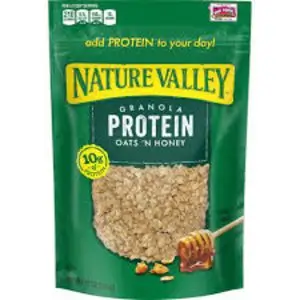
- Wolosyzn v. General Mills: Federal Court class action alleging General Mills’ Nature Valley Granola products that are labeled “made with 100% NATURAL whole grain OATS,” deceive the public because the products are 0.45 parts per million synthetic glyphosate. The lawsuit argues that anything containing detectible synthetics cannot be “100% natural,” and therefore, Nature Valley Granola is deceptively labeled. On July 12th, the judge dismissed the case on the ground that it “was not plausible” a reasonable consumer would believe “100% Natural” means zero synthetic components, and therefore, no one could reasonably be misled by the label. If the label can’t be misleading, there can be no public harm, and the case was dismissed.
- Organic Consumers v. General Mills: Same defendant, same product, same label and same law as “Wolosyzn,” above, different judge, and on July 6th the Washington D.C. Superior Court reached exactly the opposite conclusion, ruling that it “is plausible” a reasonable consumer could believe “100% Natural whole grain Oats,” means zero synthetic components, and therefore, the Nature Valley label can be misleading and the class action can go forward.
The Food Lawyers® Analysis: You almost never see exactly the same case in two different jurisdictions reach exactly opposite results. There is usually some distinguishing difference between the two cases that lets lawyers “rationalize” the differing outcomes. But not this time. Here, all of the facts, products and law were identical. In one case, the judge ruled it was obvious people would not be misled; in the other case the judge ruled it was obvious people would be misled. In one case, the litigation was terminated and in the other case it was permitted to proceed. Two takeaways: (1) Food companies should get legal advice before using “Natural” on labeling (our firm is currently defending two food companies that tried “do it yourself” Natural labeling); (2) FDA has said they would define “Natural” — — they need to step in and do it because the Courts certainly can’t.

